John Tan
Assistant Instructor
"When combined with body methods, internal principles, and guided intention, this practice allows qi and energy within the body to circulate thoroughly and delicately."
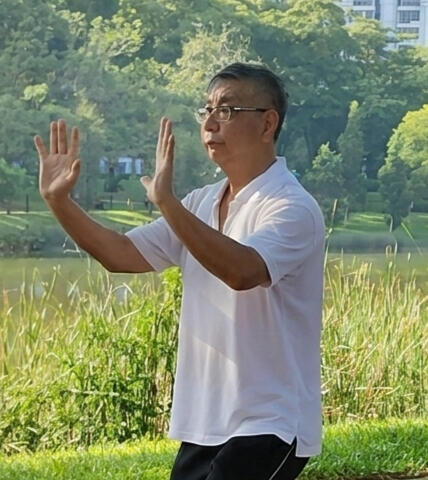
Cheng Ban 清滿
Senior Practitioner
这是我练郝式太极的一点想法。学习太极拳17年,机缘巧合下,8年前遇到郝式太极拳老师,Mr Oz。学郝式太极让我对太极拳有更深的了解和体悟。不一般的教学方式,从心法、身法、意念引导到站桩,每打完一套拳后,身心愉悦、脸色红润,感觉皮肤都在呼吸。持续数小时,全身都热乎乎地!之前上下楼梯膝盖会痛,所以行拳得穿护膝套。老师的耐心教导,从纠正步法、身法及调拳。现在走拳时不必穿护膝,膝痛已改善。有几次滑脚都能平衡住没摔倒,身体的平衡和反应大大提高。感冒药也少吃了,謝謝。但有一点,人
就是瘦不下来!😭😭😭
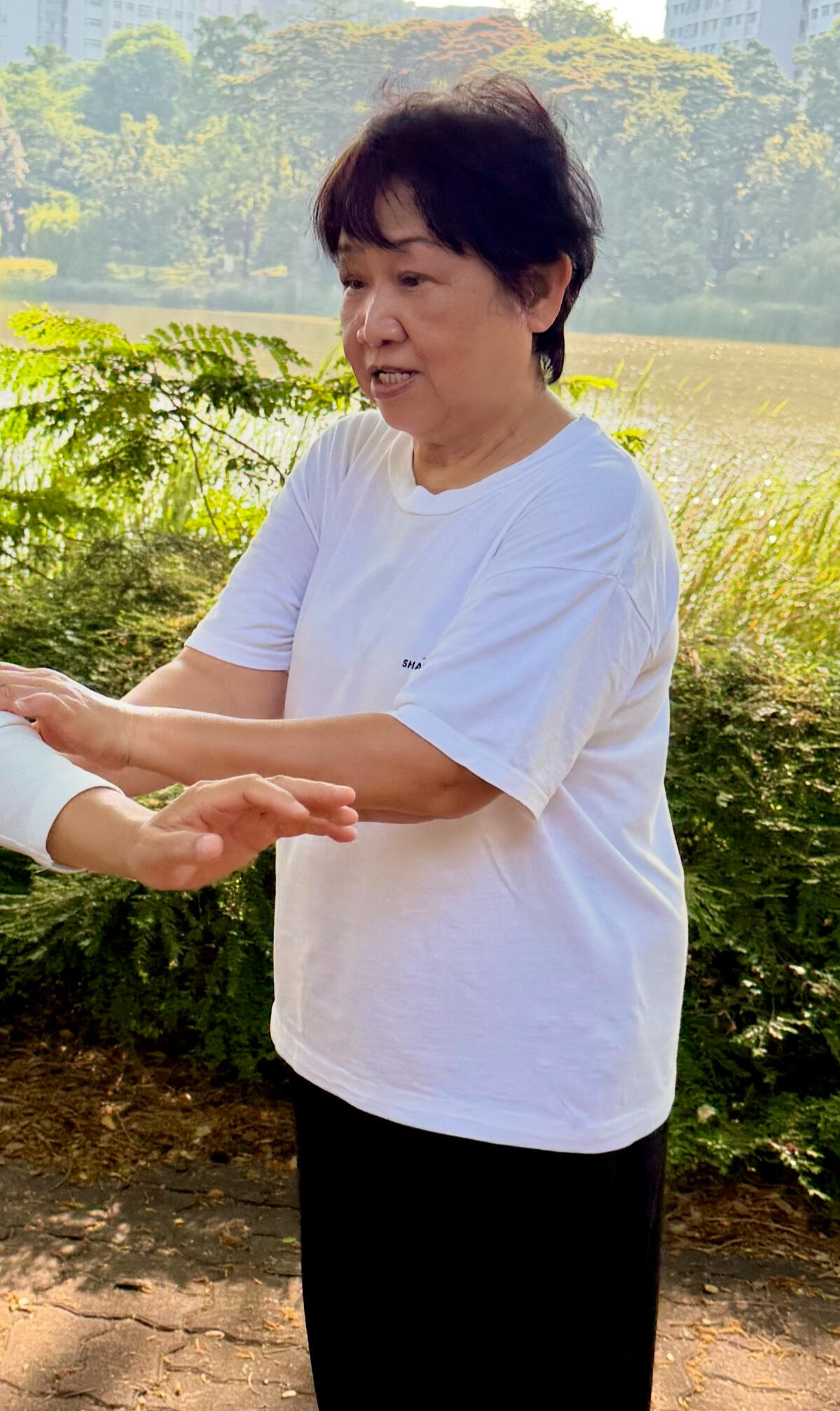
刘淑丽 Shu Li
Senior Practitioner
三年前开始跟随Master Oz学习郝式太极拳。
虽然在此之前己经习练过不下十来套的太极套路,只可借一直都只是专注和停留在外在套路的习练,直至机缘巧合下,接触到了郝式太极拳,才开始一步步的往内寻。在Master Oz认真和系统性的引领下,我从郝式太极的基本动作”启, 承,开,合"开始,到十三身法,再结合站桩和九十六套路,一路学习郝式太极如何以意行拳,把对身法严谨的要求, 贯穿于每一个运作。学习赦式太极拳,差若毫厘,缪以千里,有良师(郝式传人)言传身教,让我获益良多。特别想提的是"学拳容易,改拳难", 在我初学赦式太极时,Master Oz和几位资深同学,也帮我纠正了一些一直以来都没意识到的错误身法,特别感激。
学习太极无捷径,需不断地重复练习,从错中求正,正中求进。我几次遇到瓶颈,但只要坚持练习和学习,都能有所突破。很幸运有一班志同道合的拳友在充满活力的榜鹅公园一同学习。增添不少乐趣。
刘淑丽, 2026劳动节快乐
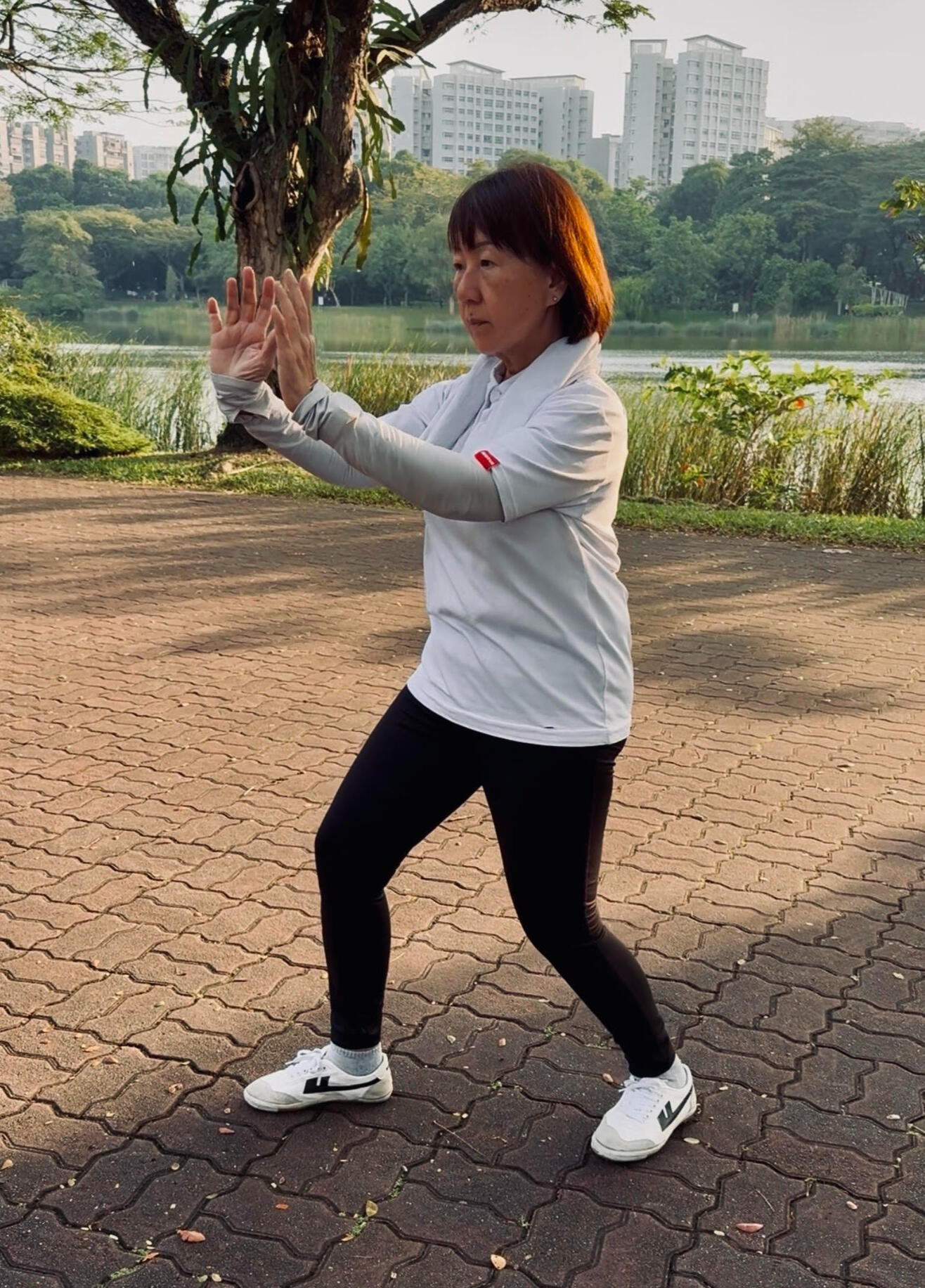
Thomas Chua
Assistant Instructor
Reflection on My Taiji Learning JourneyThrough my Taiji journey, I have come to realise that there are three key factors that truly determine progress in the art.The first is the direct transmission of genuine Taiji principles from a qualified lineage holder and mentor. After spending a few decades practising mainly movement-based and modern Taiji approaches, I eventually realised that simply repeating forms without understanding the underlying principles can easily become an empty exercise. Likewise, explaining principles only through words, without the ability to demonstrate and validate them through the body, has limited value. Through learning with Mr Oz at Haotaiji Research Institute Singapore, I began to experience these principles in a much deeper and more practical way.For years, I thought I understood Taiji, but only later realised how much I was missing.The second factor is the quality of the teacher. A mentor must be willing to share openly, guide patiently, and help students understand how principles are expressed through movement and application. In my earlier years of practice, I often felt like I was walking in a dark room — moving, searching, but not truly progressing. With Mr Oz’s guidance, the path gradually became clearer, and my understanding deepened.The third factor is correct practice. Progress only comes through consistent training. There are no shortcuts in Taiji. However, what matters most is learning how to practise correctly. Through Haotaiji’s methodology and guidance, I found a more structured and meaningful way to train.I also came to appreciate that Taiji is an art of infinite depth disguised within finite movement. The external form may remain the same, but the practitioner is never the same person who practised it yesterday. Because of this, the art continually renews itself through sincere practice and understanding.Beyond the technical aspects, I experienced noticeable physical improvements as well. Longstanding shoulder stiffness and neck pain gradually disappeared through correct practice, alignment, and body integration.Another important part of the journey has been the learning environment at Haotaiji Research Institute Singapore. The atmosphere is welcoming, sincere, disciplined, and encouraging. Despite the depth of the art, students are guided patiently according to their individual level and progress, which creates a positive environment for learning and growth.Today, at the age of 71, I still see myself as a student. The learning journey continues, but Taiji has helped me maintain better health, clarity, and happiness throughout the years.To anyone who is genuinely searching for a deeper understanding of Taiji beyond surface-level movement, I would encourage you to take the first step and experience the training for yourself.
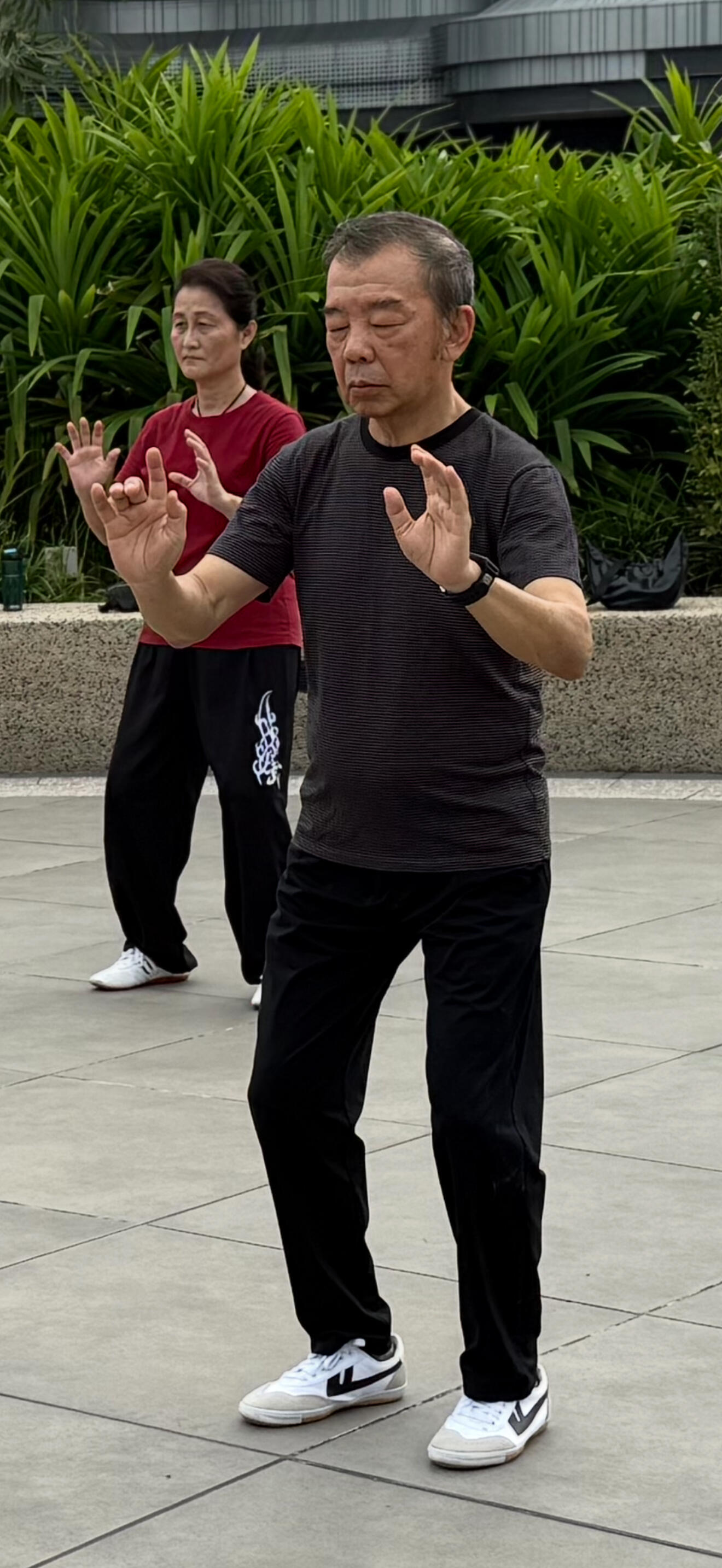
Philip Low
Senior Practitioner
Philip Low, 83 years old (2026), has been practicing Hao Style Taijiquan under Master Oz for over seven years.Over this period, he has undergone three major surgeries - prostate surgery (2022), liver and gallbladder-related surgery (2023), and pancreas and spleen surgery (2024). Despite the severity of these medical events, he continues to maintain a steady recovery trajectory and remains in good overall condition under regular medical follow-up.During one of his procedures, doctors prepared for the possibility of a blood transfusion due to the complexity of the operation. However, his condition remained stable throughout surgery.Philip continues his daily Hao Taiji practice without interruption, integrating it as a consistent part of his recovery and long-term health maintenance.“Recovery from these procedures has reinforced his commitment to daily practice and structured movement training.”Beyond his personal practice, Philip is an active advocate of Hao Style and has introduced multiple new students to the group.He continues to view practice not as an occasional activity, but as a structured, daily discipline that supports stability, recovery, and long-term well-being.
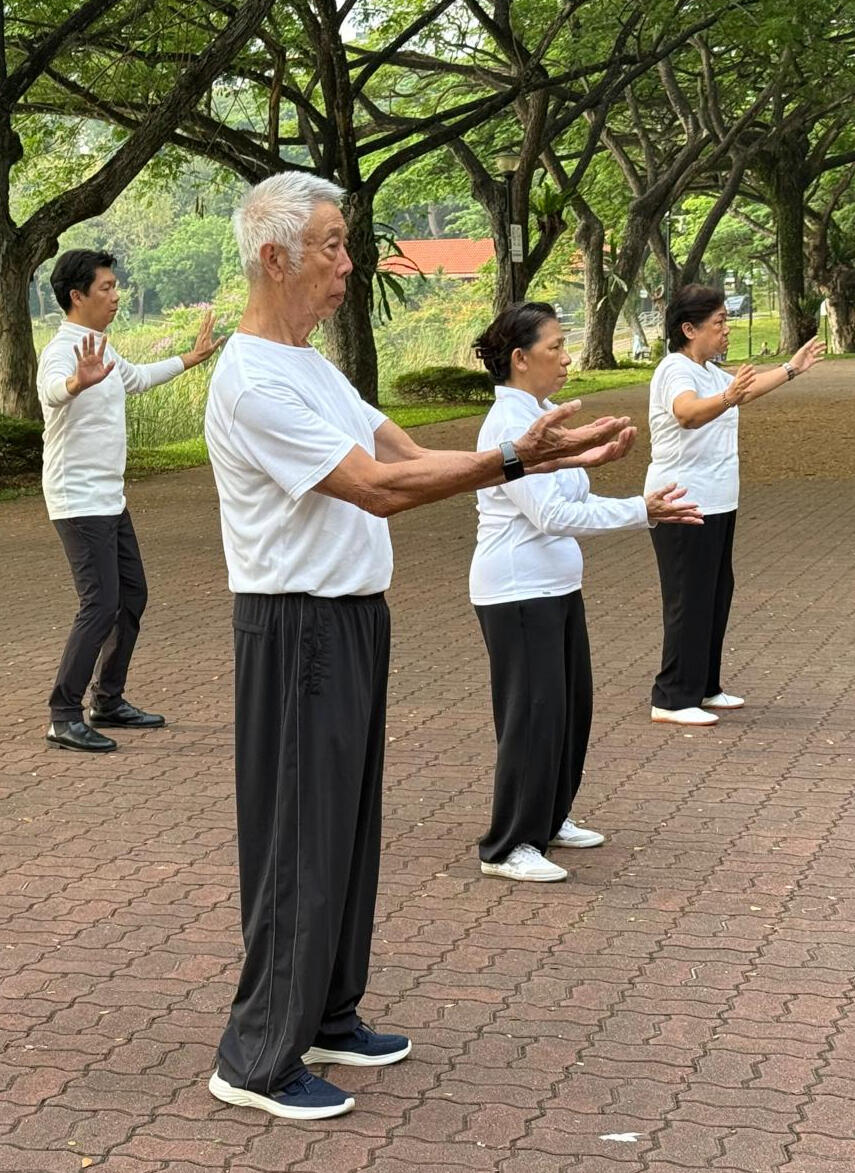
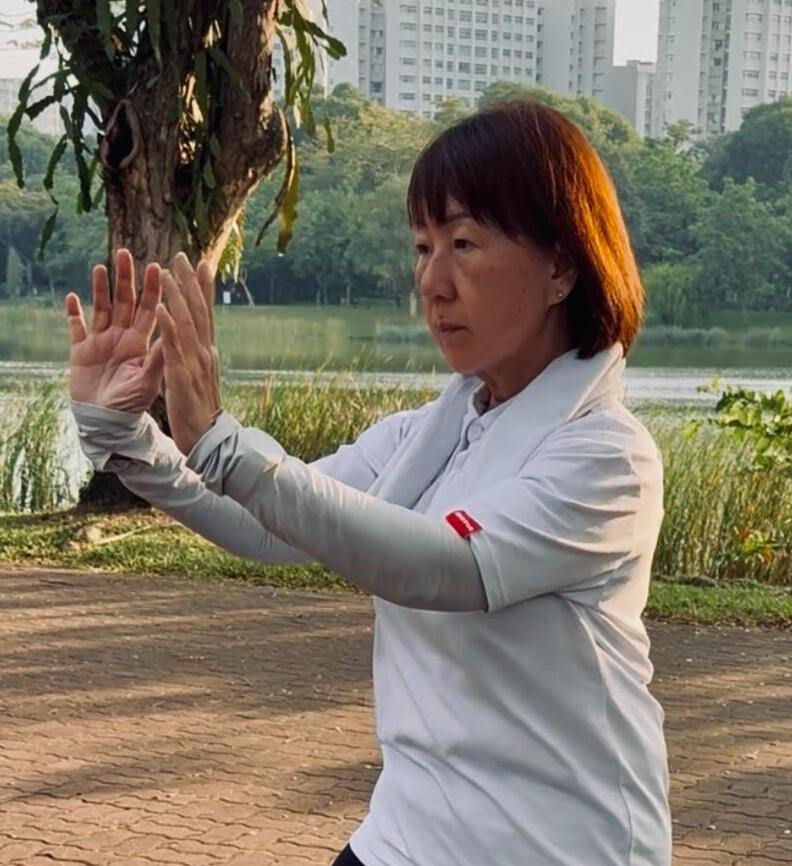
Reflections
I started learning Hao-style Taijiquan with Master Oz three years ago.Before that, I had already practiced more than ten different Taiji forms. But to be honest, I was always focused on the external movements—just going through the routines without really going deeper. It wasn’t until I had the chance to encounter Hao-style Taiji that I began to look inward and understand the art on a different level.Under Master Oz’s structured and dedicated guidance, I started from the fundamentals of Hao-style Taiji—Qi, Cheng, Kai, He (initiate, receive, open, close)—then moved on to the thirteen body methods. Together with standing practice and the 96-form routine, I gradually learned how to use intention to guide the movements, and how strict body requirements must be maintained in every single action.In Hao-style Taiji, even the slightest deviation can lead you far off course. Having a true teacher—a lineage holder—personally guiding and correcting me has been incredibly valuable. One thing that really stayed with me is this: “Learning a form is easy; correcting it is hard.” When I first started, Master Oz and some of the senior students helped me fix many mistakes in my body method that I hadn’t even been aware of. I’m especially grateful for that.There are no shortcuts in learning Taiji. It requires constant repetition—finding the correct through mistakes, and then improving further from what is correct. I’ve hit a few plateaus along the way, but as long as I kept practicing and learning, I was able to break through each time.I also feel very fortunate to have a group of like-minded training partners, learning together at the lively Punggol Park. It adds a lot of joy to the journey.— Liu Shuli
Happy Labour Day 2026
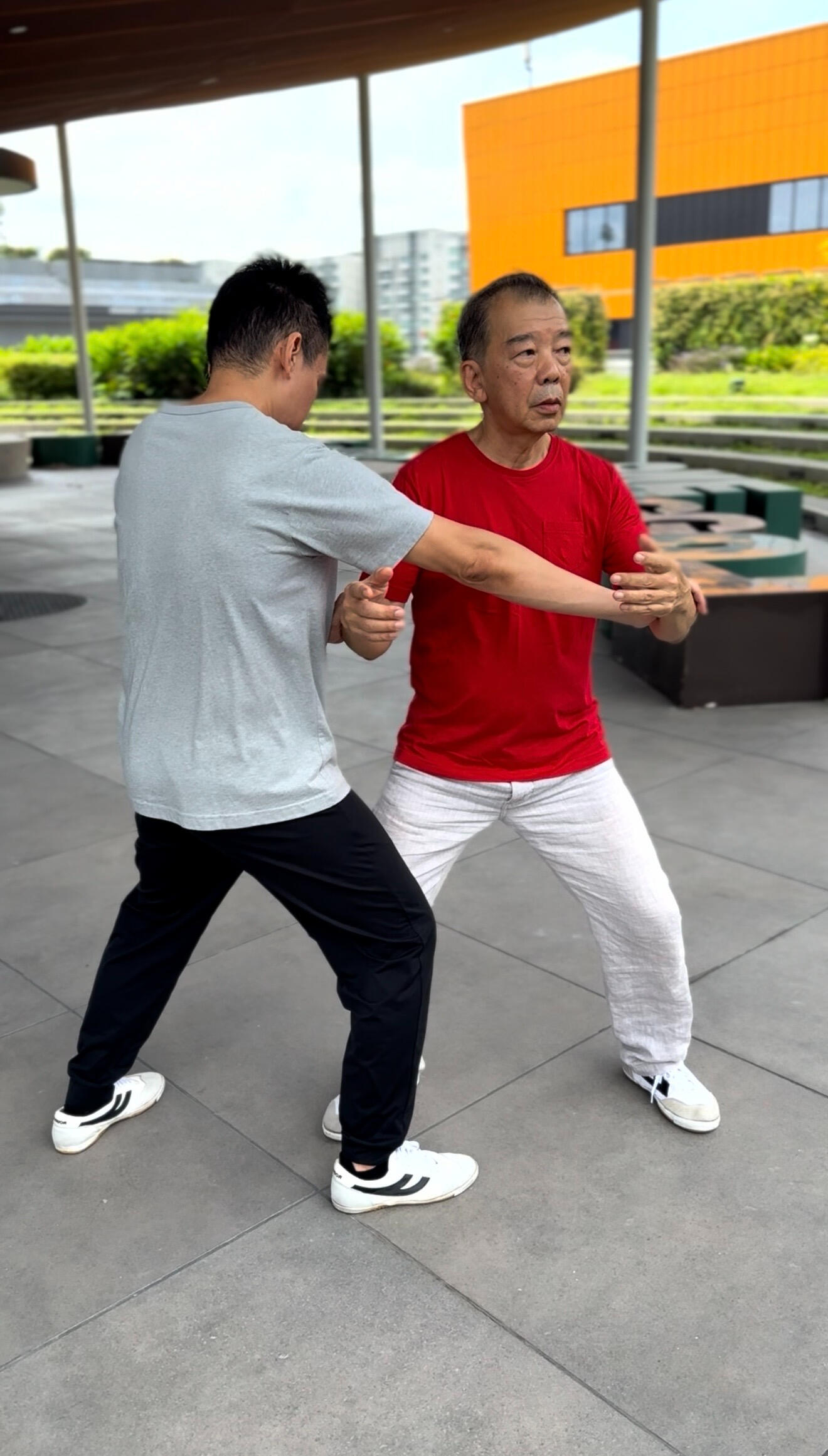
Reflections
我的太极学习之路感悟在我的太极学习过程中,我逐渐体会到,真正决定一个人能否在太极这门艺术中有所进步,有三个非常关键的因素。第一,是否能遇到真正具备传承的老师,并得到口传身授的太极核心原则。过去几十年里,我接触的大多是偏向动作套路化、现代化的太极练习方式。后来我才明白,如果只是不断重复动作,却不明白动作背后的原理和身体运作方式,时间久了,很容易流于形式。更重要的是,很多人会“讲理论”,却无法真正用身体示范和验证这些原则,那终究只是停留在语言层面。直到我在新加坡郝太极研究院跟随 Oz 老师学习后,我才开始真正体会到太极原理如何在身体中落实,并在练习中逐渐感受到其中更深层的内容。很多年里,我一直以为自己已经懂太极了,后来才发现,原来自己错过了很多真正重要的东西。第二,是老师本身的品质。真正好的老师,不只是懂,更重要的是愿意分享、耐心指导,并帮助学生理解这些原则如何体现在动作、结构以及应用之中。早年练拳时,我常觉得自己像在黑暗的房间里摸索,虽然一直在动、一直在练,但始终没有真正前进。后来在 Oz 老师的指导下,我才慢慢看见方向,许多过去模糊不清的东西,也开始逐渐清晰起来。第三,是正确的练习方法。太极没有捷径,所有进步都必须靠长期不断地练习。但更关键的问题是:你是否练对了。通过郝太极的教学体系与训练方法,我终于找到一种更有系统、更有层次,也更有意义的练习方式。同时,我也越来越体会到:太极是一门“以有限动作,承载无限深度”的艺术。外在动作也许始终是同一套动作,但每天练拳的人,其实早已不是昨天的自己。正因为如此,太极这门艺术,才能在不断练习中持续更新,并不断让人有所领悟。除了技术层面的提升,我身体上的变化也非常明显。过去长期存在的肩膀僵硬与颈部疼痛,在正确的练习、身体调整与整体协调下,慢慢改善,甚至消失了。另外,我也非常珍惜郝太极研究院的学习氛围。这里的环境既认真严谨,又亲切包容。无论是初学者还是已有经验的练习者,都会得到耐心的指导与鼓励,让人能够安心学习,并持续成长。如今,71岁的我,依然把自己当作一名学生。太极的学习没有终点,而这一路的练习,也让我在身心健康、精神状态与生活心境上,都得到很大的帮助与提升。如果你也正在寻找真正更深入的太极,而不只是停留在表面的动作练习,我真心鼓励你踏出第一步,亲自去体验与感受。
中文
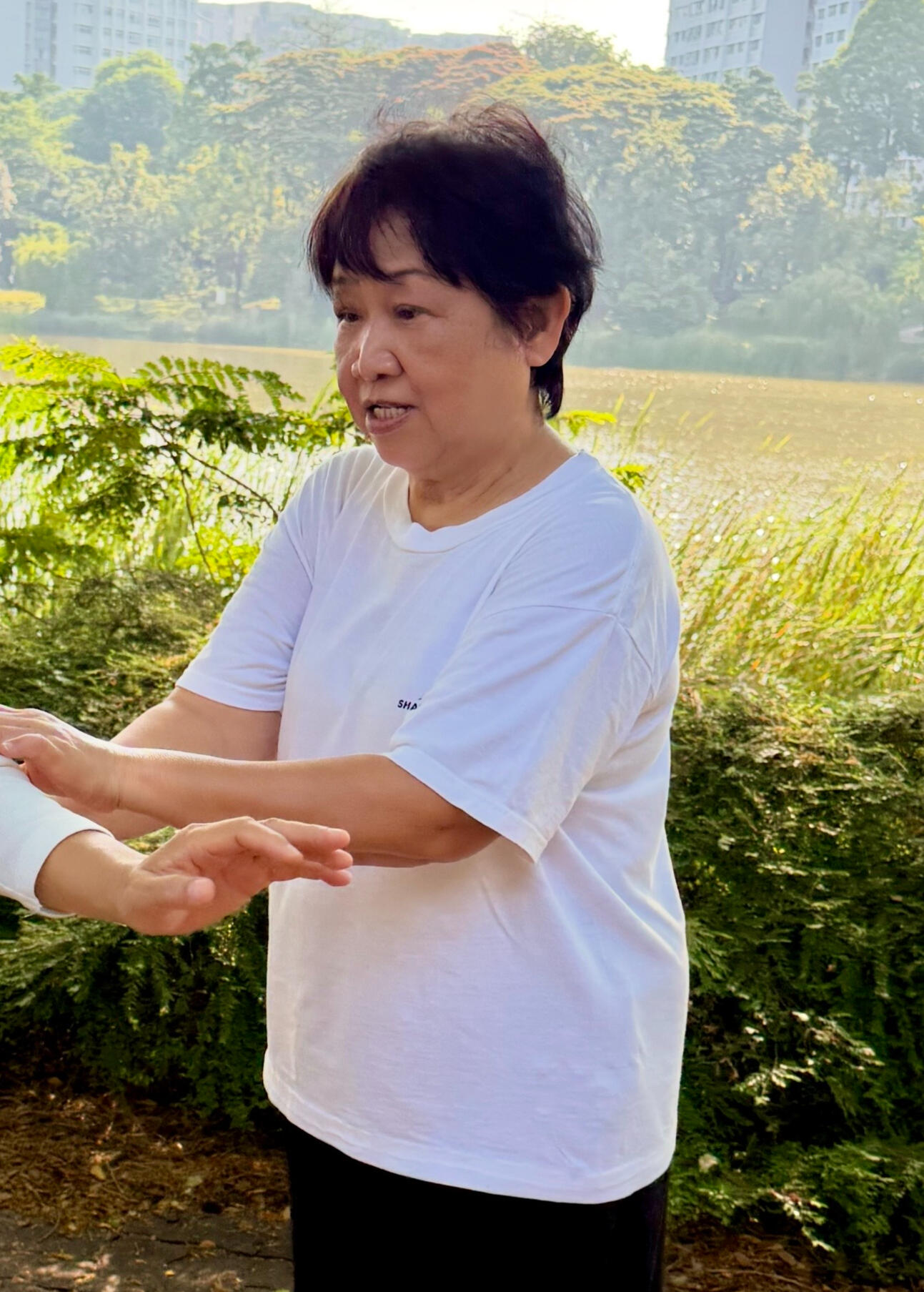
这是我练郝式太极的一点想法。学习太极拳17年,机缘巧合下,8年前遇到郝式太极拳老师,Mr Oz。学郝式太极让我对太极拳有更深的了解和体悟。不一般的教学方式,从心法、身法、意念引导到站桩,每打完一套拳后,身心愉悦、脸色红润,感觉皮肤都在呼吸。持续数小时,全身都热乎乎地!之前上下楼梯膝盖会痛,所以行拳得穿护膝套。老师的耐心教导,从纠正步法、身法及调拳。现在走拳时不必穿护膝,膝痛已改善。有几次滑脚都能平衡住没摔倒,身体的平衡和反应大大提高。感冒药也少吃了,謝謝。但有一点,人
就是瘦不下来!😭😭😭
Reflections
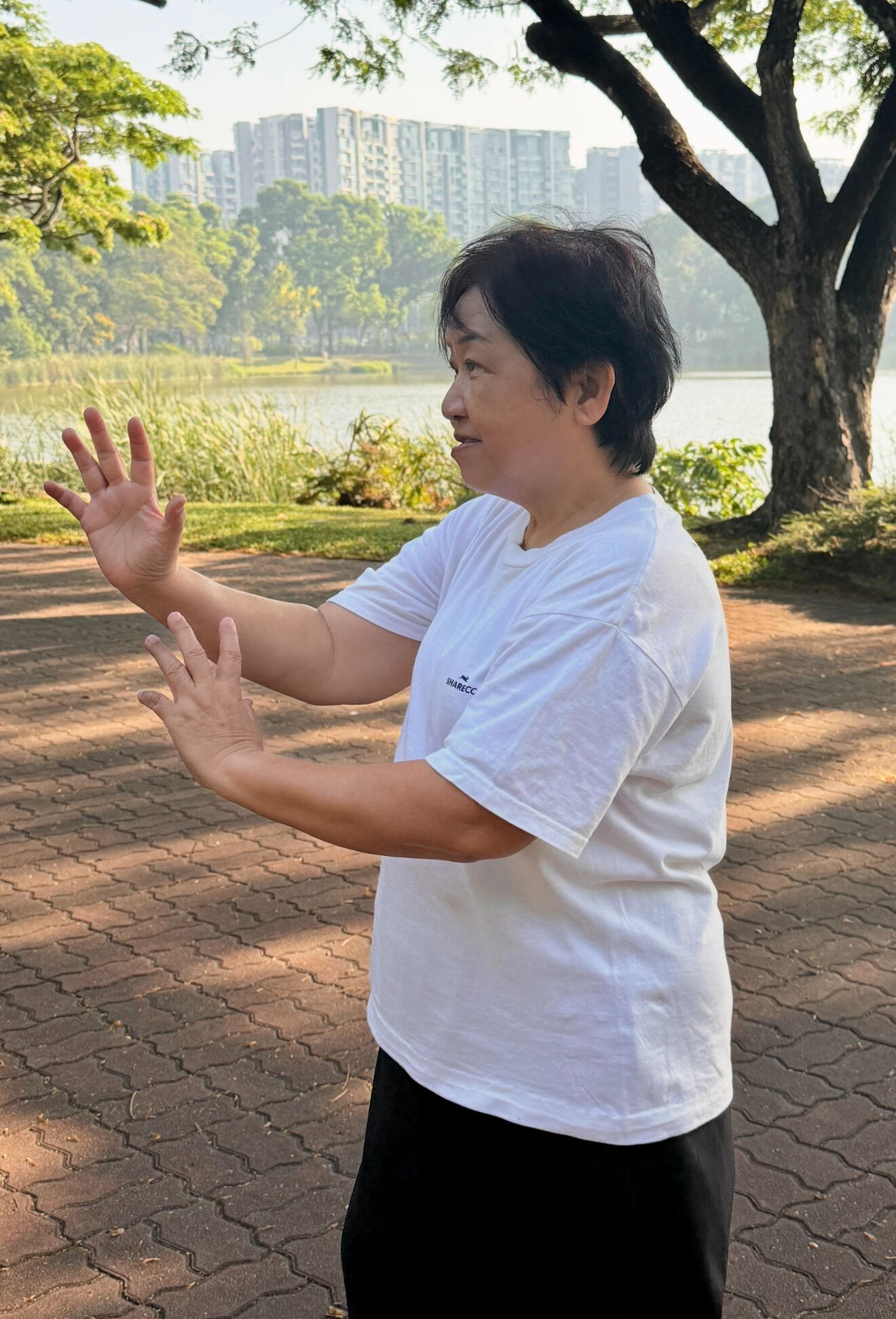
These are some of my thoughts on practicing Hao-style Tai Chi.I have been learning Tai Chi for 17 years. By a stroke of good fortune, I met my Hao-style Tai Chi teacher, Mr. Oz, 8 years ago.Learning Hao-style Tai Chi has given me a deeper understanding and personal insight into Tai Chi. The teaching approach is quite unique—starting from inner principles, body mechanics, and mental intention, to standing meditation. After completing each set, I feel a sense of joy in both body and mind, my complexion becomes rosy, and it even feels as though my skin is breathing. The warmth throughout my body lasts for several hours!Previously, I experienced knee pain when going up and down stairs, so I had to wear knee supports while practicing. With my teacher’s patient guidance—correcting my footwork, body alignment, and form—my condition has improved. I no longer need to wear knee supports during practice, and the knee pain has eased. There have been a few occasions where I slipped but managed to regain balance without falling. My balance and reflexes have improved significantly. I also find that I need less cold medication now—thank you for that.However, there is one thing… I still can’t seem to lose weight! 😭😭😭
Reflections
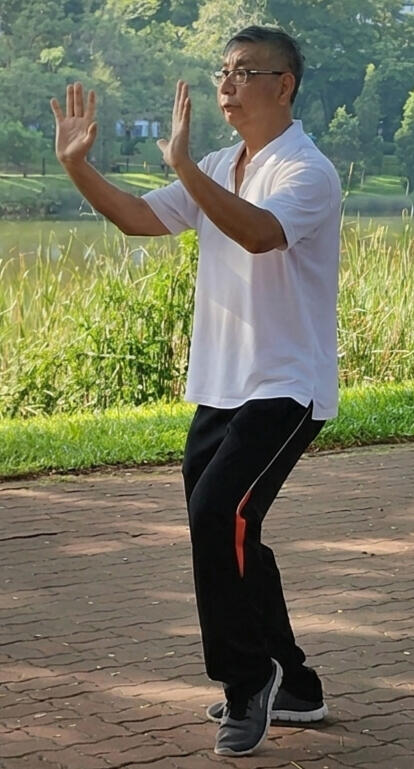
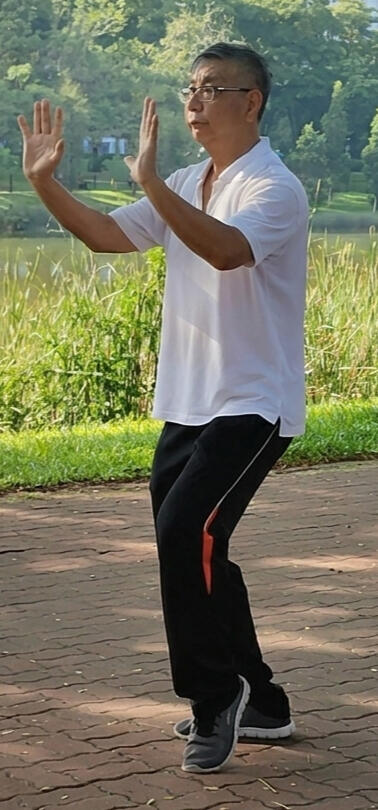
I have formed an inseparable bond with Hao-style Tai Chi.After retiring, I practiced modern Tai Chi routines diligently for many years, never daring to become lax or complacent. Yet I always felt that I had not truly crossed the threshold into the real essence of Tai Chi. Encountering Hao-style Tai Chi gave me a much deeper understanding and personal realization of what Tai Chi truly is.I came to realize that the movements and routines of Tai Chi are only its external forms. Hao-style Tai Chi has thirteen body methods, with very strict requirements for posture and body mechanics. These thirteen methods systematically and perfectly organize the body from head to toe, equipping and integrating it as one whole. It also preserves internally transmitted principles and methods passed down directly from teacher to student—something that cannot be learned from books or videos alone.Hao-style Tai Chi also emphasizes standing meditation. When combined with body methods, internal principles, and guided intention, this practice allows qi and energy within the body to circulate thoroughly and delicately.After years of wholehearted dedication and careful cultivation through standing practice, body methods, and internal principles, what was once intellectual understanding gradually transformed into embodied understanding. With every lift of the hand or step of the foot, my hands, feet, and body connect naturally as one. What sinks and settles into the soles of the feet can be expressed through the palms. While practicing the form, the sensation of qi becomes strong, energy flows through the limbs, and inner intention can drive outer movement.After standing practice and completing a set of forms, my shirt is soaked with sweat, yet I feel refreshed and invigorated, my cheeks flushed, and my whole body indescribably comfortable. Most importantly, my health has improved tremendously.Until now, it is like being addicted to opium—if I do not practise Tai Chi for even one day, my whole body feels stiff and uncomfortable. Standing meditation and Hao-style Tai Chi have become a part of my life!
中文
郝式太极的不解之缘:我退休后习练现代太极套路,多年来不敢松懈怠惰,但自觉还是不能跨入太极拳的门槛。遇见郝式太极,让我对太极拳有更深的了解和体悟。原来太极拳的招式,套路,只是外在的表现形式。郝式太极有13个身法,它对身法训练的要求非常严格。13个身法,把身体从上到下,有序完美的地组织,武装起来。还有口传心授的内功心法,这些是看书和视频都学不会的传承。郝式太极也注重站桩,配合身法、心法和意念导引的站桩,能让体内的气和能量无微不至的流动。经过多年专心一意,认真耕耘,站桩、身法、心法,把种种的心知逐渐变成身知。一举手和抬足,手、脚和身体能自发的联结,松沉入脚底的东西能在掌上出来。 行拳时,气感强,能量在四肢流动,能用意念的内动驱动外动。 在站桩和一套拳后,汗透衬衫,感觉精神奕奕,双颊泛红,全身无比舒畅。最重要的是,健康也大大改善!
到如今,像抽鸦片,一日不练拳,浑身僵滞不舒服。站桩和郝式拳已成为生活的一部分!
Contact
Lorem ipsum dolor sit amet, consectetur adipiscing elit. Praesent vestibulum risus sit amet lectus condimentum, ac fermentum nibh ullamcorper magna.
Thank you
Lorem ipsum dolor sit amet, consectetur adipiscing elit. Praesent vestibulum risus sit amet lectus condimentum, ac fermentum nibh ullamcorper magna.
Thank you
Scan with wechat app to join our Weixin Haotaiji Channel.